Original source: Associated Press
Not every important advance in disability technology requires artificial intelligence, robotics or a laboratory full of expensive equipment.
Sometimes innovation begins with a material growing locally.
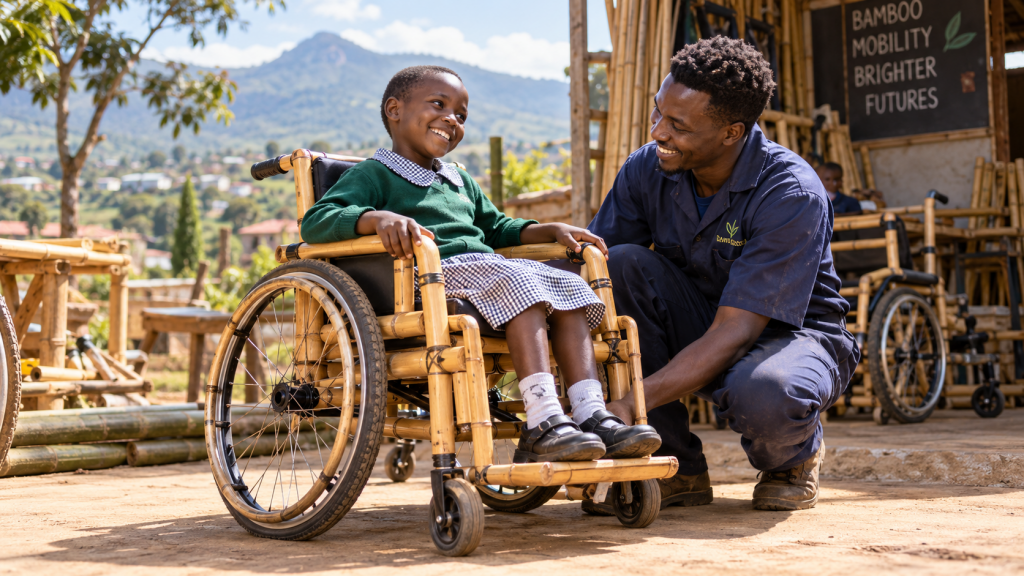
A project in Kenya has been developing lightweight wheelchairs for children using locally sourced bamboo. According to Associated Press reporting, the initiative involving Bethany Kids purchases bamboo from local farmers and supports technicians who build the chairs in local workshops.
The appeal is not simply that bamboo is unusual. It is what local manufacturing could potentially solve.
Imported assistive equipment can be expensive. Replacement parts may be difficult to obtain. Products developed for smooth pavements and highly serviced urban environments may not always suit the roads, terrain and repair infrastructure of other regions.
Locally built equipment provides an opportunity to design around those realities. It can also create local technical knowledge, easier repair networks and economic benefits for the communities producing the equipment.
These remain prototypes, and bamboo should not suddenly be presented as the answer to wheelchair provision. Safety, strength, seating, posture, durability and individual fit all matter enormously.
But the project highlights an important principle.
Disability innovation does not always mean adding more technology.
Sometimes progress means using a material that is available, making the device easier to repair, designing it around local conditions and bringing the price closer to what families and healthcare systems can afford.
There is room in disability innovation for brain-computer interfaces and robotic exoskeletons.
There should also be room for a workshop, a skilled technician and a piece of bamboo.
Credit: Associated Press.
Backlink: Original Associated Press feature.